Deep in a frozen Belgian forest, a group of American soldiers dug holes in the ground and held their position for weeks. This is the story of Bois Jacques. One of the most important places of the Second World War.
↓ scroll to discover ↓
The Forest
What is Bois Jacques?
Bois Jacques is a forest near the small town of Bastogne in Belgium. In French, "Bois Jacques" simply means "Jack's Wood." Today, it is a quiet place full of trees. But in the winter of 1944, it was one of the most dangerous places in the world.
The forest is famous because a group of American soldiers called Easy Company, a part of the 506th Parachute Infantry Regiment, 101st Airborne Division, stayed there during the Battle of the Bulge. They dug foxholes (small holes in the ground) to protect themselves from German attacks and artillery.
📍
Location
Near Bastogne, Belgium
❄️
Temperature
As low as −20°C
📅
Period
Dec 1944 – Jan 1945
🪖
Unit
Easy Company, 101st Airborne
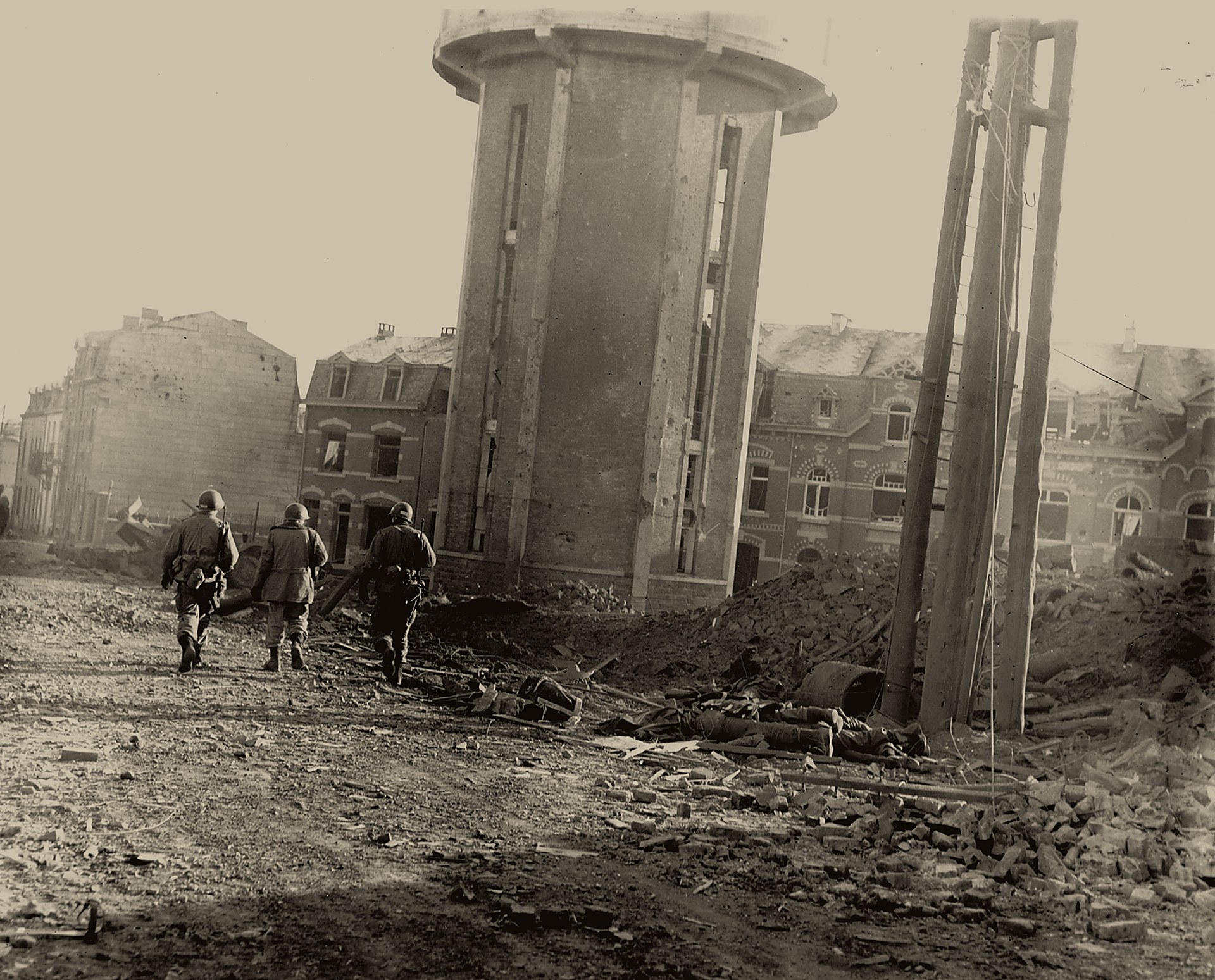
▲ Soldiers of the 101st Airborne Division in Bastogne, Christmas 1944. (U.S. Army / Wikimedia Commons)
The Battle
The Battle of the Bulge
On 16 December 1944, Germany launched a massive surprise attack against the Allied forces in the Ardennes, a hilly, forested region in Belgium and Luxembourg. This attack became known as the Battle of the Bulge, because the German forces pushed a "bulge" into the Allied front line.
The Germans wanted to reach the port city of Antwerp and cut the Allied forces in two. It was their last major offensive of the war. The attack was a shock; the weather was terrible, with thick fog and heavy snow, which meant Allied aircraft could not fly.
"Nuts!" — the famous one-word reply from American General Anthony McAuliffe when the Germans asked him to surrender Bastogne.
Bastogne was surrounded by German forces, but the Americans refused to give up. The 101st Airborne Division - including Easy Company - held on without enough food, ammunition, or warm clothing. They were cold, hungry, and outnumbered, but they did not retreat.
On 26 December, General Patton's Third Army broke through the German lines and relieved Bastogne. The Battle of the Bulge was the largest land battle that the United States fought in the Second World War.
The Foxholes
Life in the Foxholes
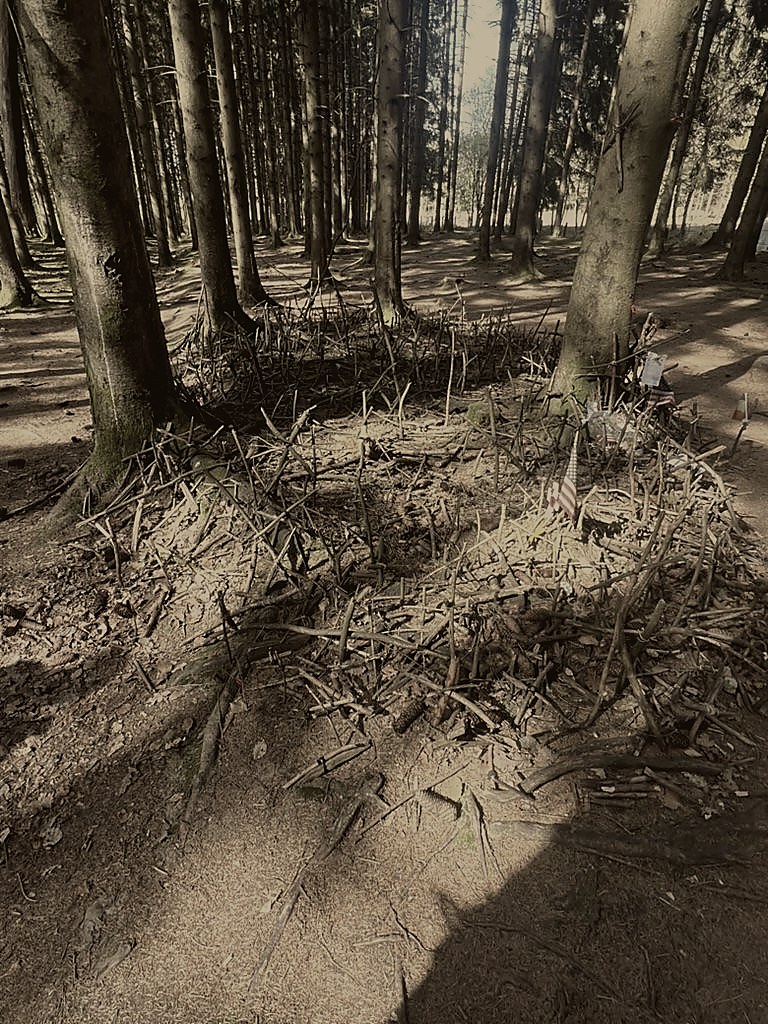
A foxhole is a small hole that soldiers dig in the ground to protect themselves. In Bois Jacques, the soldiers of Easy Company dug their foxholes in frozen ground , which was extremely hard work. The temperature sometimes dropped to minus twenty degrees Celsius.
The men had very little to keep them warm. Many did not have proper winter boots or warm coats. They slept in the holes, ate cold food, and spent hours doing nothing ; just waiting and listening for German attacks. Artillery shells fell constantly, and the tall trees made it even more dangerous because the shells would explode in the treetops, sending sharp pieces of wood in every direction.
"We were cold. We were wet. We were exhausted. But we were still there."
Despite everything, the soldiers of Easy Company held their positions in Bois Jacques for several weeks. They showed incredible courage, teamwork, and determination. Today, visitors can still see the remains of these foxholes in the forest.
▲ This photo was taken during our own visit to Bois Jacques on April 27, 2026. At various points in the forest, you could watch impressive VR films , it felt so real, as if you were actually there in December 1944. (Personal photo)
"The most beautiful place with the saddest story I have ever come across."
— Bram Marsman, age 12
Watch & Learn
Easy Company — The Full Story
Watch this documentary to learn more about Easy Company and the Battle of the Bulge. You will see how the soldiers lived, fought, and survived in Bois Jacques.
When you visit Bois Jacques today, you will notice something special: small crosses and memorials placed near the old foxholes. These are left by visitors from all over the world who come to pay their respects to the soldiers who fought and died there.
People from many different countries make the journey to Bastogne and Bois Jacques, especially around the anniversary of the Battle of the Bulge in December. They walk through the same forest, stand at the edge of the same foxholes, and remember the young men who spent weeks in the frozen ground , fighting for freedom.
✝︎
Visitors leave crosses to honour the fallen soldiers
🌿
The foxholes are protected as a historical site
🕊️
People from around the world come to remember
Bois Jacques is more than just a forest. It is a place of memory . A reminder that ordinary young men did extraordinary things in one of the darkest winters of the twentieth century.